Function and Importance of the Rhomboids
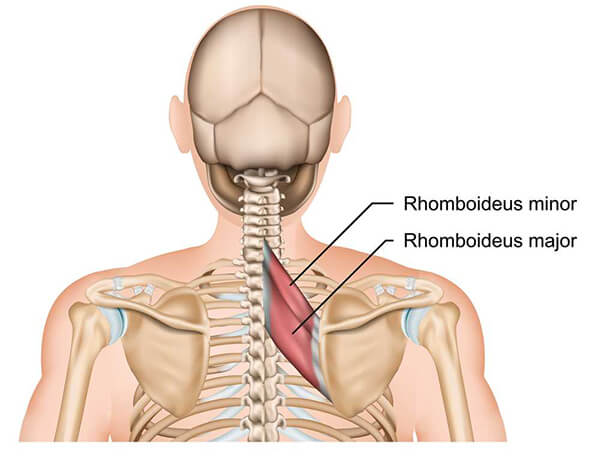
What is A Rhomboid Muscle
Pain in the rhomboids, trigger points, and muscle strains are frequent problems that can significantly impact daily activities and athletic performance. These issues often arise from overuse, poor posture, or compensatory tension caused by other muscle imbalances.
The Impact of Rhomboid Tightness
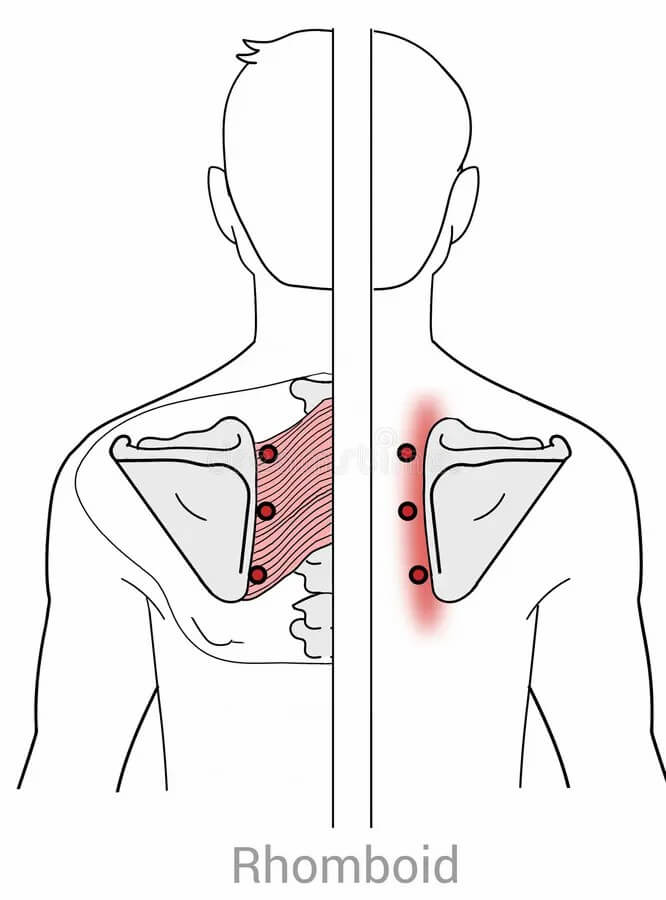
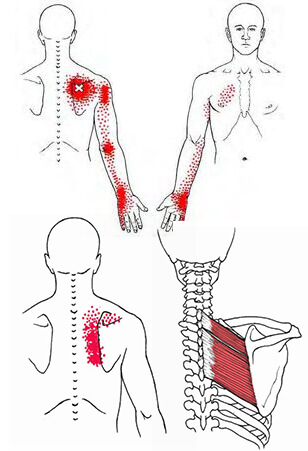
Pain associated with rhomboid trigger points typically manifests along the inner edge of the shoulder blade, often worsening during rest or inactivity. This discomfort may be accompanied by a dull ache or sharp pain, particularly when moving the shoulder or performing activities that involve lifting or reaching.
In some cases, the pain may radiate to the neck, upper back, or arm, mimicking symptoms of other musculoskeletal issues.
Additionally, individuals may experience muscle stiffness, reduced range of motion, or a sensation of tightness in the upper back. If the rhomboid muscles are strained, symptoms may include localized tenderness, swelling, or difficulty maintaining proper posture.
It is important to note that pain in this region can also be influenced by trigger points in adjacent muscles, such as the trapezius, serratus anterior, or levator scapulae.
What Causes Rhomboid Pain
Muscle Strain
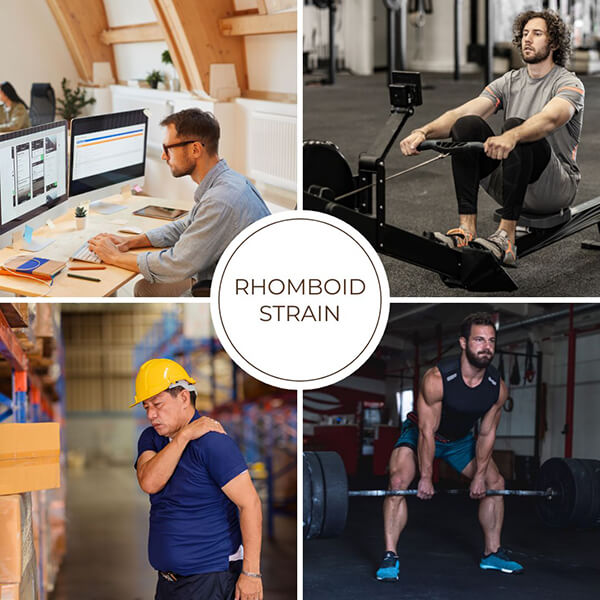
Overuse or poor posture, such as prolonged slouching or repetitive shoulder movements, can strain the rhomboid muscles. This strain may occur during activities like:
- Prolonged desk work
- Heavy lifting
- Rowing
- Pull-ups
- Climbing
- Weightlifting
Muscle Knots (Myofascial Trigger Points)
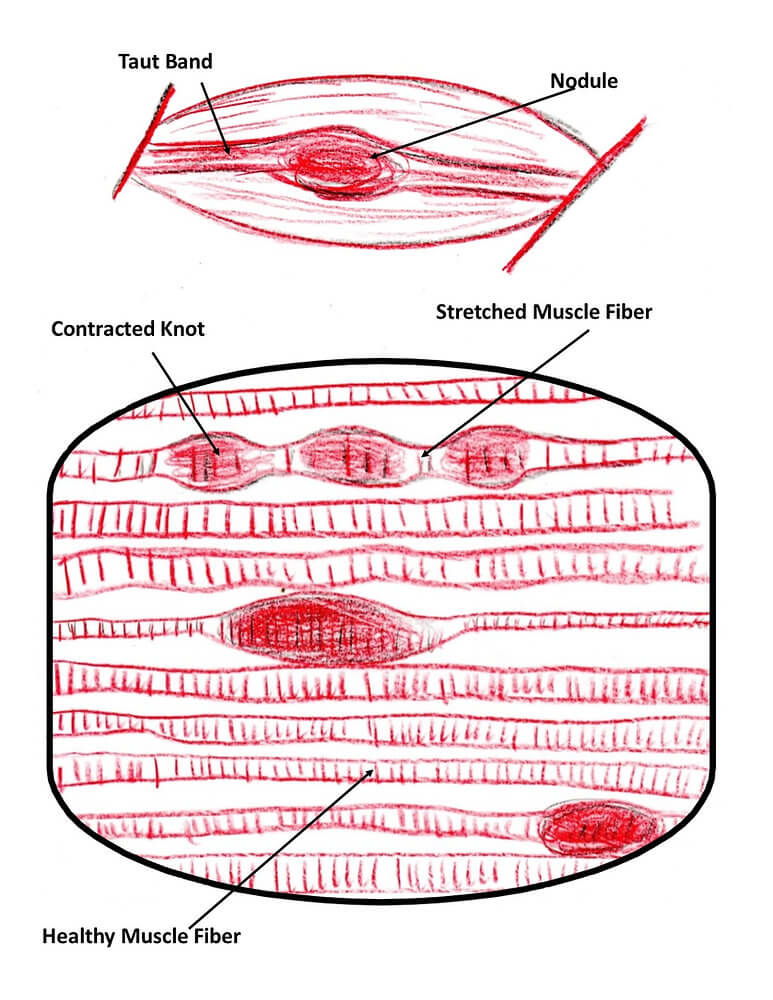
Chronic tension or overuse of the rhomboids can cause the formation of muscle knots, also known as myofascial trigger points. These knots are tight, sensitive areas within the muscle that can cause localized pain and referred discomfort in surrounding areas. Long-term stress or inadequate recovery can exacerbate this condition.
Pathological Compensation from Adjacent Muscle Groups
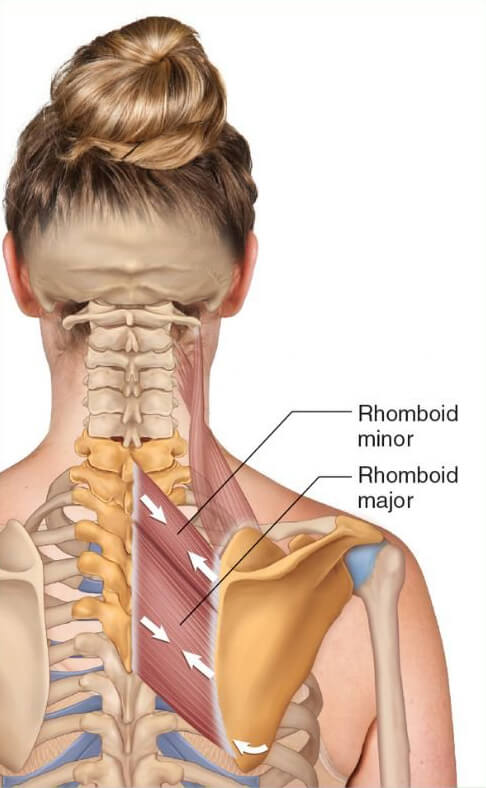
Trigger points in the scalene muscles and pectoralis major disrupt scapular stability, inducing anterior displacement of the scapula through their chronic shortening state. This forces the rhomboids into sustained eccentric contraction to compensate for the biomechanical imbalance. The resulting abnormal biomechanical load causes secondary ischemic injury to rhomboid myofibers, manifesting as persistent dull pain, restricted range of motion, and radiating pain to the interscapular region.
How to Relieve Rhomboid Muscle Pain
Self Massage the Rhomboids
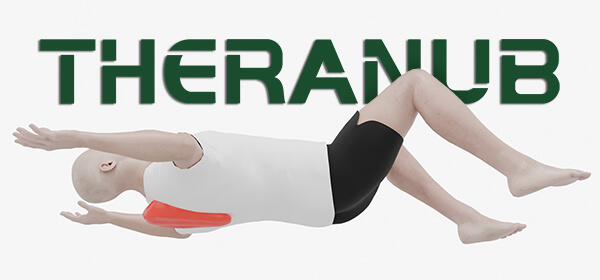
Use the rhomboid massage tool to release trigger points in the upper back muscles.
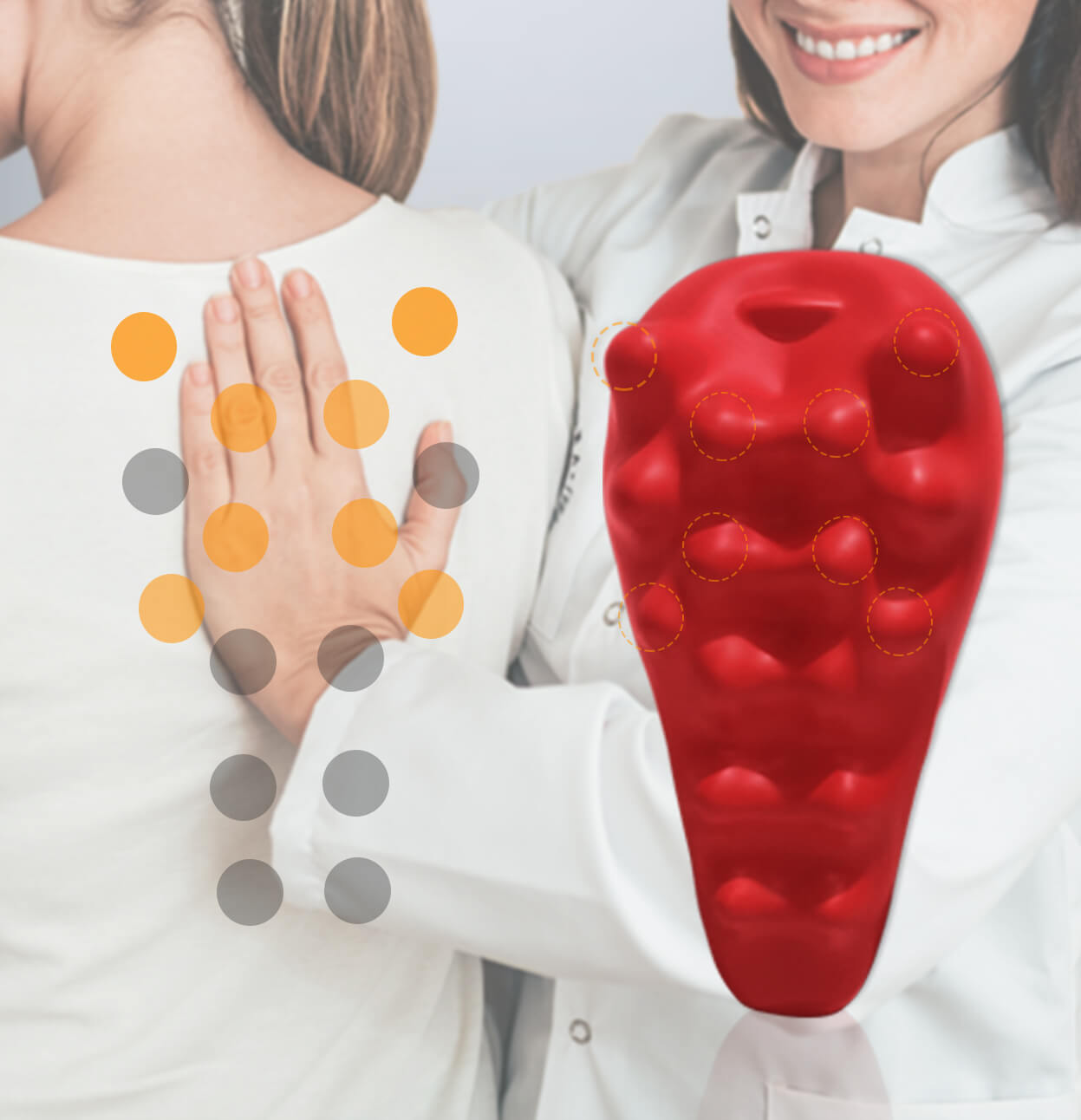
Lie flat on the rhomboid massage wedge, allowing your body weight to press against the raised points.
This targeted pressure helps to loosen and relieve trigger points, promoting muscle relaxation and improved blood flow.
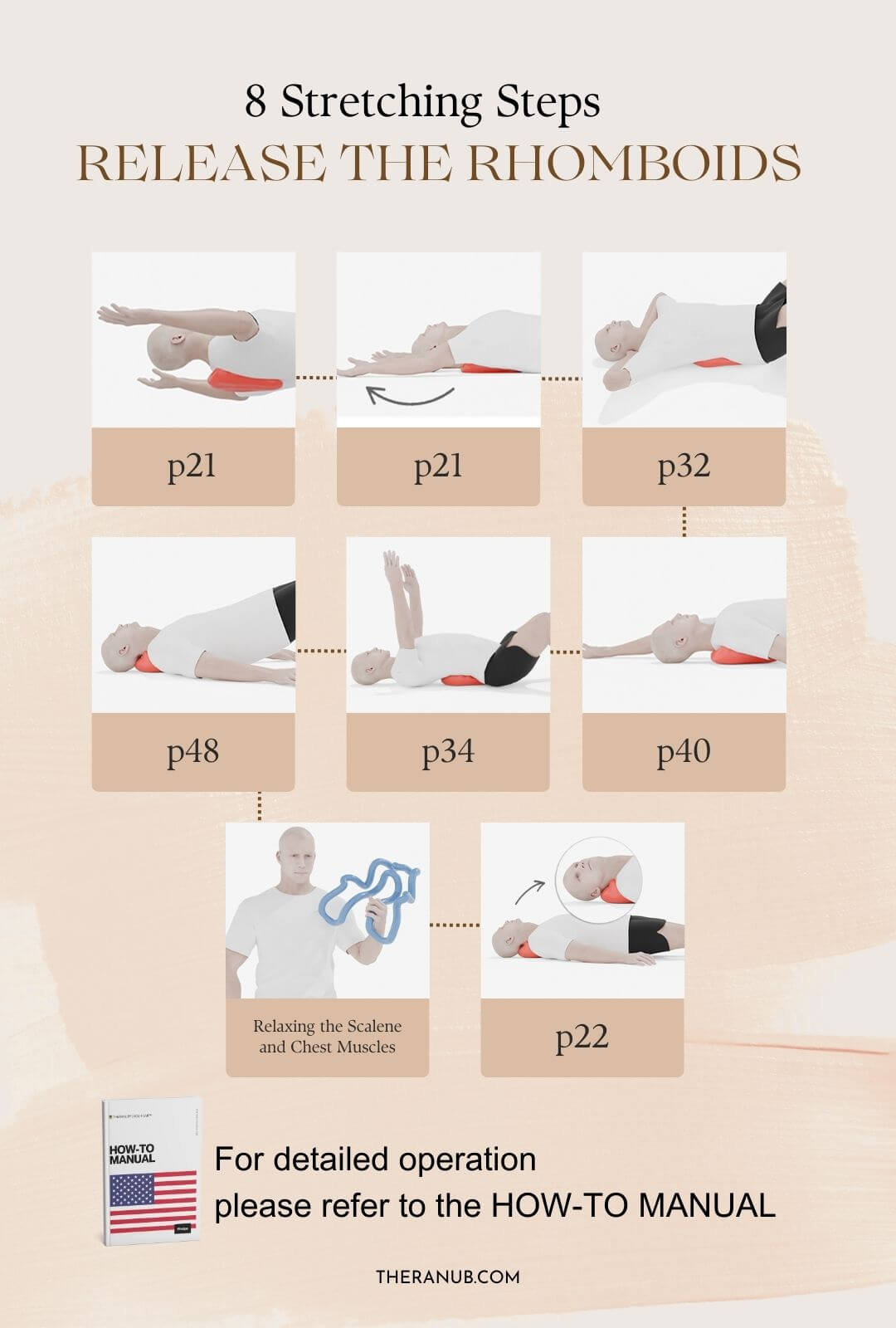
6 Stretching Steps to Release the Rhomboids
Rhomboids Squeeze
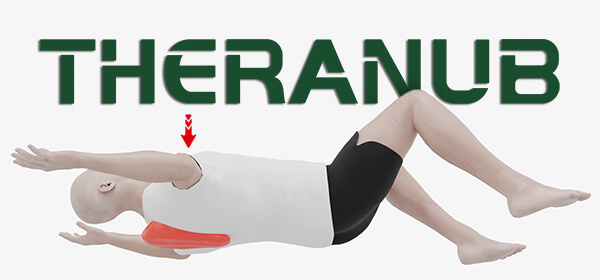
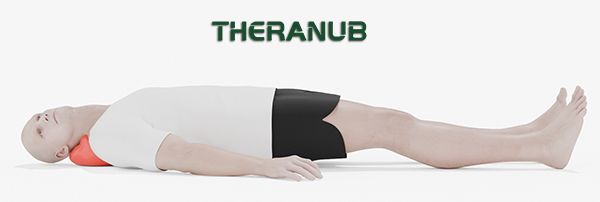
Lie on a flat surface with your arms at your sides. Press your shoulders toward the ground and squeeze your shoulder blades toward your spine.
Hold for 5 seconds, then release.
Perform 2 sets of 15 repetitions. Remember to breathe deeply and avoid holding your breath.
THERANUB® The Wedge
30-day return policy. No risk for you.
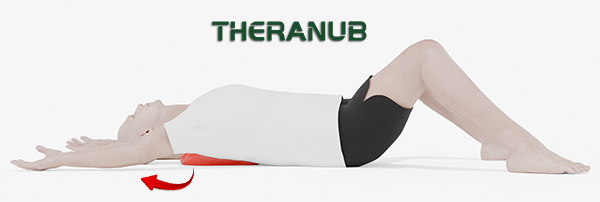
Floor Reach
Extend your arms to the sides with the back of your hands touching the ground. Bend your elbows at 90 degrees, then slowly raise your shoulders overhead while keeping them flat on the floor. Do 2 sets of 5 to 10 repetitions. Only move as far as is pain-free, keeping your arms, elbows, and wrists aligned. For added flexibility, try clasping your hands overhead while maintaining contact with the ground.
THERANUB® The Wedge
Rhomboid Massage Tool
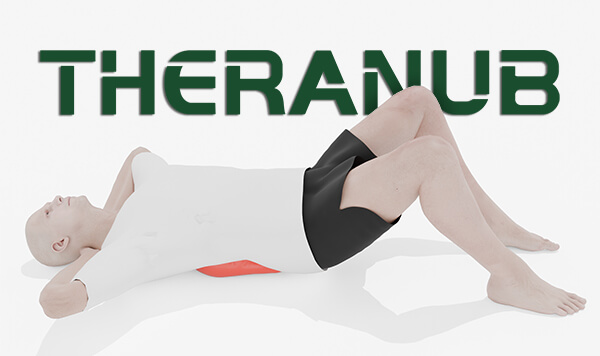
Spinal Reset
Lie on a flat surface with your feet grounded for support. Inhale deeply and cradle your head with your arms. Hold this position for 20 to 30 seconds and repeat 5 times.
THERANUB® The Wedge
30-day return policy. No risk for you.
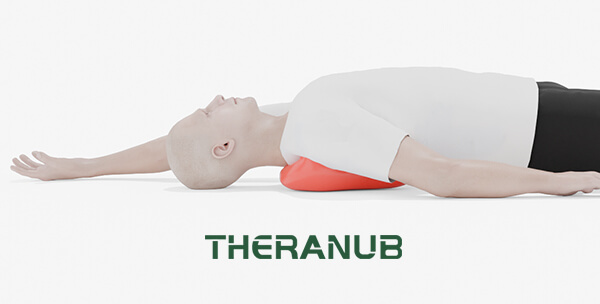
Back Activation
Raise your right arm upward and backward, holding for 3 seconds when you feel your mid-back engage. Return to the starting position and repeat with your left arm. Perform 10 repetitions on each side.
THERANUB® The Wedge
Rhomboid Massage Tool
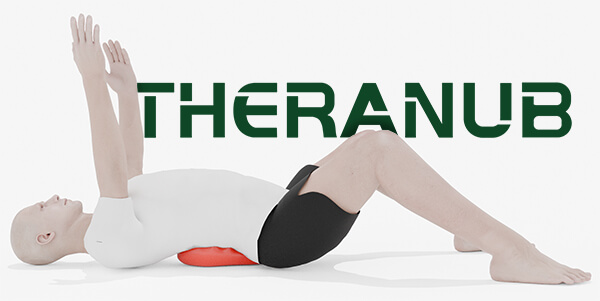
Spinal Extension
Lie on a flat surface with your head and back supported and your feet grounded. Place your arms at your sides and lift your chin to a 90-degree angle. Inhale deeply through your nose as you raise your arms, then exhale through your mouth as you extend your arms overhead, stretching your spine.
THERANUB® The Wedge
30-day return policy. No risk for you.
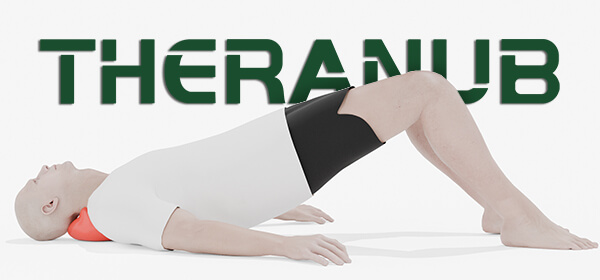
Glute Bridge
Start by lying on your back with your knees bent and feet flat on the floor, hip-width apart. Place your arms at your sides with palms facing down.
Slowly lift your hips until a straight line forms from your knees to your shoulders.
Engage your core, then lower yourself back to the starting position. Repeat 8 to 10 times, ensuring steady breathing. Adjust the height of the bridge based on your comfort level.
If you feel pain, lower the bridge closer to the ground. Gradually work toward a full bridg
e as your strength improves.
Hold the position for 5 to 10 seconds before releasing, and increase the duration as you progress.
THERANUB® The Wedge
Rhomboid Massage Tool
Why Rhomboid Strain Won’t Heal
Can Rhomboid Pain Radiate to Chest
The chest and scalene muscles can significantly affect the rhomboids. Tightness or trigger points in the chest muscles can pull the shoulder blades forward, forcing the rhomboids to overstretch and compensate.
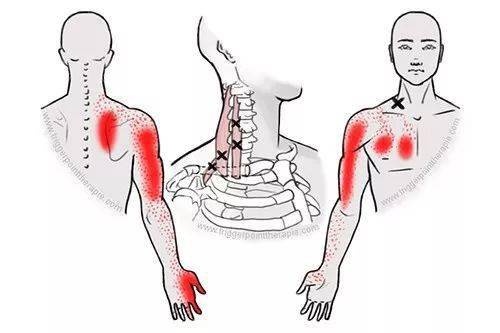
Similarly, trigger points in the scalene muscles can refer pain to the rhomboid region, perpetuating discomfort.
If these imbalances are not addressed, the rhomboid strain may persist or worsen, as the rhomboids continue to work against the tension created by the chest and scalene muscles.
Relaxing the Scalene and Chest Muscles
To promote healing of the rhomboid strain, it is essential to release tension in the scalene and pectoral muscles. Use targeted massage techniques, such as applying pressure with your fingers or The Hoop, to locate and deactivate trigger points in these muscles.
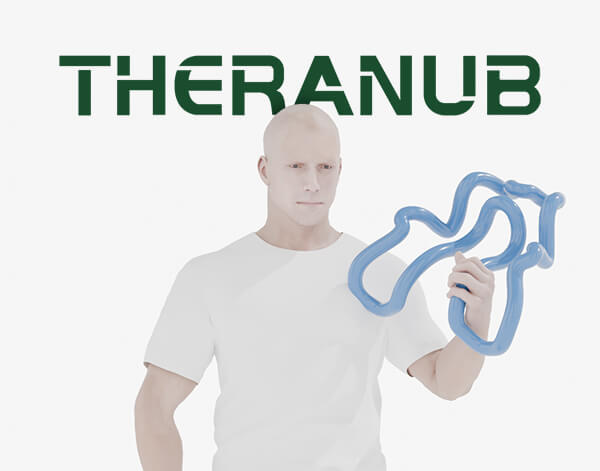
For the scalene muscles, focus on the sides of the neck, and for the pectoral muscles, work on the chest area near the shoulders. Regular massage can help restore balance, reduce compensatory strain on the rhomboids, and facilitate recovery.
THERANUB® The Wedge
Rhomboid Massage Tool
Recommendations for Preventing Rhomboid Issues
Improve Posture
Avoid prolonged periods of slouching, hunching, or holding your head forward, as these positions can strain the rhomboids. Maintain a neutral spine alignment to reduce unnecessary stress on the upper back muscles.
While rhomboid trigger points are often confused with lower trapezius trigger points due to their shared association with poor posture, using The Wedge can effectively target both areas simultaneously, helping to alleviate tension and prevent discomfort.
THERANUB® The Wedge
30-day return policy. No risk for you.
Set Realistic Expectation
When performing self-massage or trigger point release, it’s important to understand that the goal is not to "kill" the trigger points but to promote blood circulation and support the body’s natural healing process. Consistent and gentle techniques are more effective than aggressive methods.
Maintaining the health of your rhomboid muscles is essential for overall upper body function, posture, and pain-free movement.
A comprehensive approach—combining massage, stretching, and targeted exercises—can help address existing issues and prevent future problems. We encourage you to try the methods outlined above, tailoring them to your individual needs and comfort level.
If pain persists or worsens, do not hesitate to seek professional guidance for a more personalized treatment plan.
THERANUB® The Wedge
30-day return policy. No risk for you.