Tech Neck doesn't merely cause neck pain—it can also trigger headaches and various facial symptoms. With the Gear and the Wedge device, you'll perform a simple 3-step supine stretching exercise to reduce discomfort and relieve stiff neck muscles.

What Is Tech Neck?
Tech neck, also known as text neck or nerd neck, is a chronic strain on yourneck caused by prolonged forward head posture while using electronic devices like smartphones and computers.
What’s more concerning is how deeply this issue has infiltrated every aspect of yourlife. Beyond work, yourely on social media to stay connected, consume news, and share information. After a long day, youmight unwind by scrolling through YouTube, Facebook, Instagram, or TikTok—seemingly harmless habits that actually place immense stress on yourcervical spine.
These everyday behaviors contribute to screen time often exceeding 8 hours a day, with yourneck enduring five times more pressure than in a neutral posture. Over time, this leads to a cascade of issues in yourmuscles, nerves, and joints.

Some Symptoms Might Surprise You
If you believe tech neck only causes neck discomfort, it's time to think bigger.
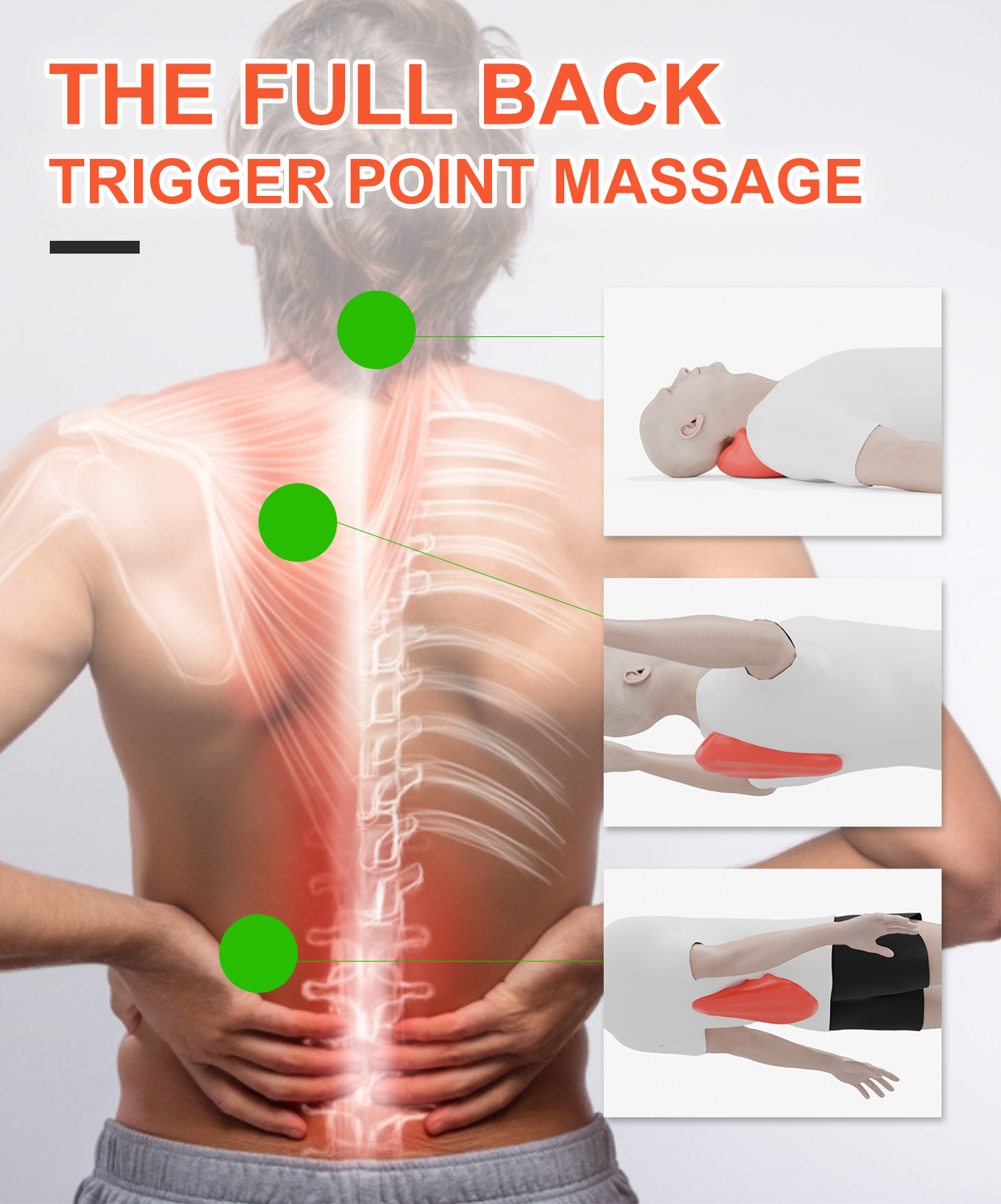
But here's the real kicker—your head, face, and neck are all connected. So that tech neck pain can actually travel, causing a bunch of other weird issues you'd never expect.
These symptoms may appear in unexpected ways:
- Head: Pain in the back of the head; crown pain; forehead pain; migraines
- Face: Temple pain; trigeminal neuralgia; jaw pain; sinus pain
- Sensory Issues: Tinnitus; blurred vision; dizziness; drooping eyelids
- Functional Problems: TMJ clicking; difficulty swallowing; tongue pain; nausea
The muscles in the front of your neck become weak from staying shortened and underused, while the muscles in the back of neck are constantly overworked—straining to keep your head stable. Over time, this can even compress your cervice spine or pinch nerves.
That’s why just getting a neck massage often doesn’t fix tech neck for good.
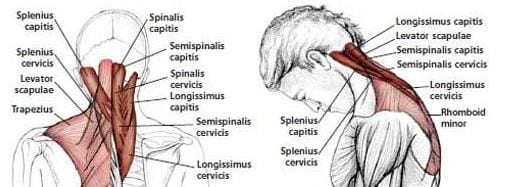
3-Step Stretching Exercises
Ready to fix your tech neck? Just follow these three steps. We'll walk you through releasing ten tight muscles that are causing the problem. It's a straightforward system designed for real results.
Step 1: Mix the Pro Techniques with At-Home Tips
To understand the treatment method, we must first grasp the injury mechanism. When you look down at your phone, the forward tilt of your head forces 6 key muscles (trapezius, levator scapulae, splenius cervicis, semispinalis capitis, suboccipital muscles, and sternocleidomastoid) into prolonged abnormal states—some over-contracted, others overstretched—ultimately leading to stiffness, nerve compression, and chronic pain.
Finding the Switch for Tech Neck Pain—The Occipital
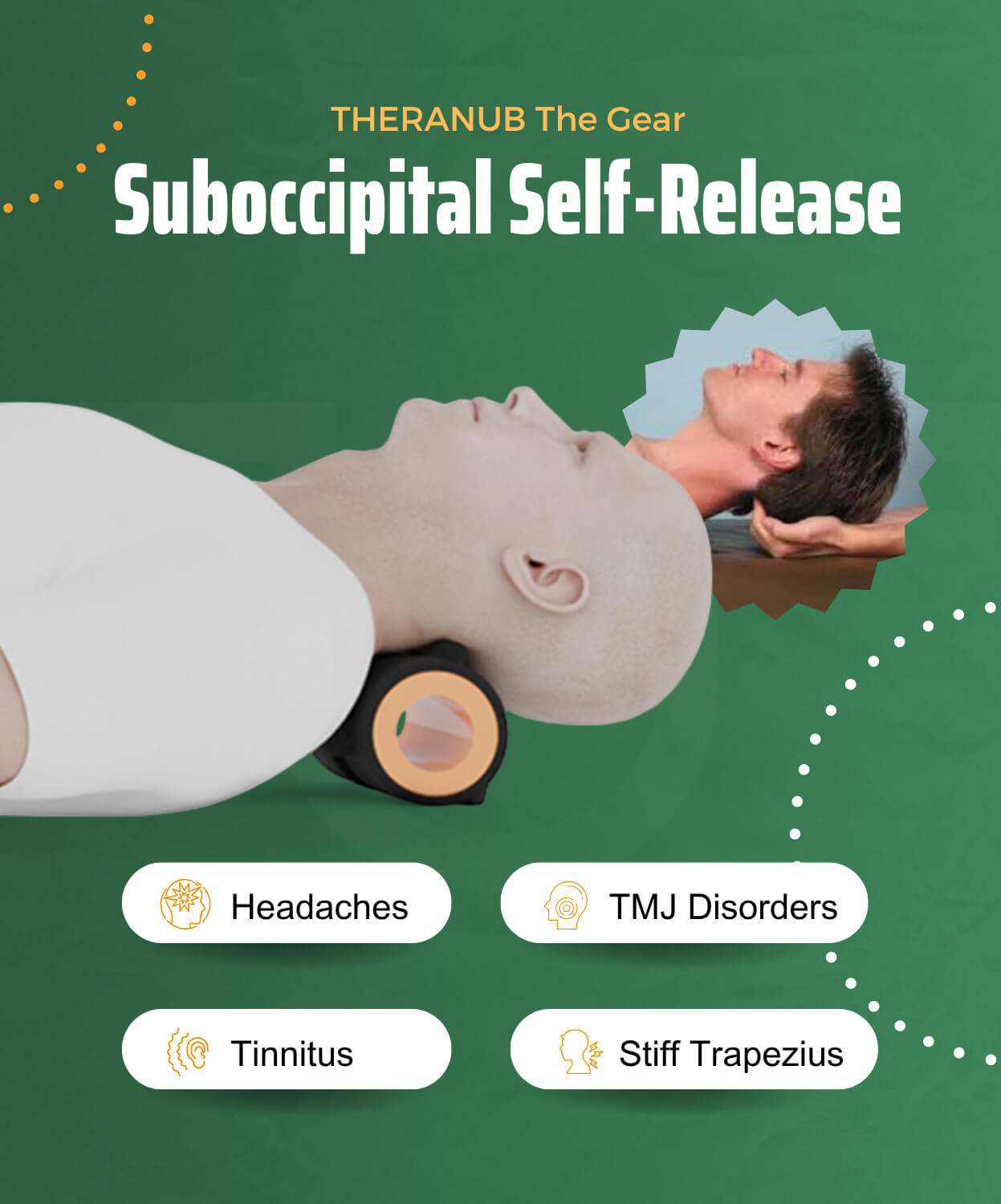
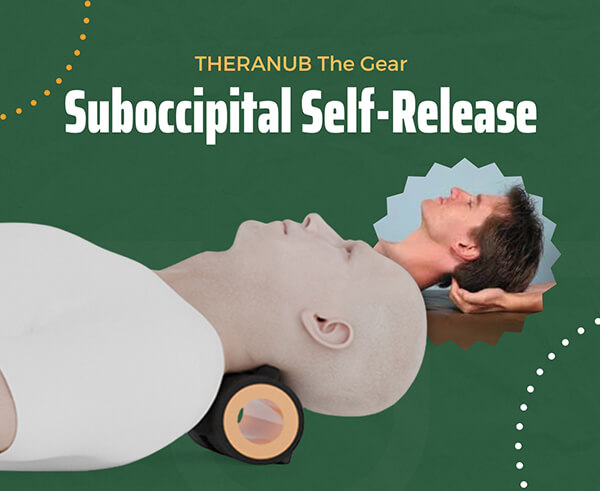
These key muscles all connect at the base of your skull — that’s your occipital area. A trained physical therapy will often cup the back of your head with their hands, gently pressing their fingertips into that spot, and let the weight of your head do the work to release tension.
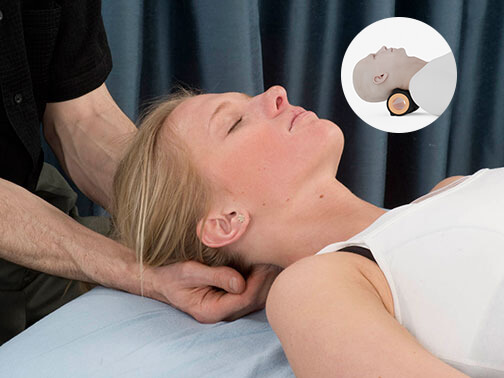
As you relax into it, the muscles along the back and sides of your neck get a soothing press, helping them loosen up. At the same time, tilting your head backward gently stretches the muscles in the front of your neck.
Plus, this technique helps release trigger points — those annoying knots — around the occipital area.
The relief is real, but it doesn’t last forever. You’ll need to keep up with treatments to feel lasting results. If booking regular appointments isn’t practical, try using an occipital release tool — it’s like giving yourself a mini massage at home.

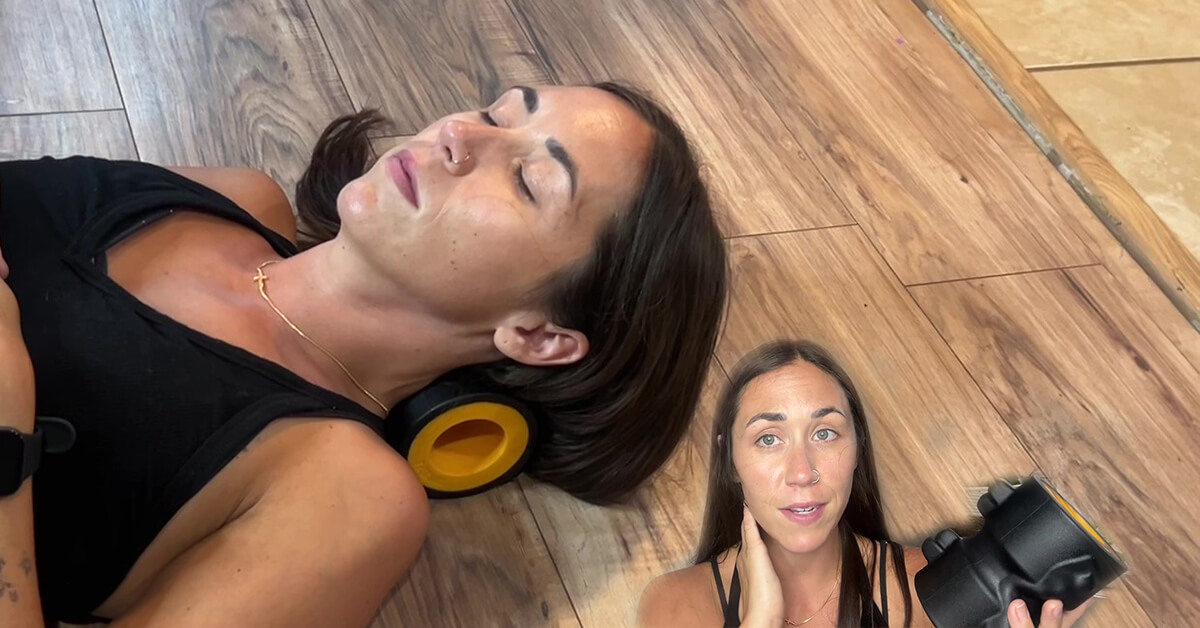
At-Home Alternative: The Gear
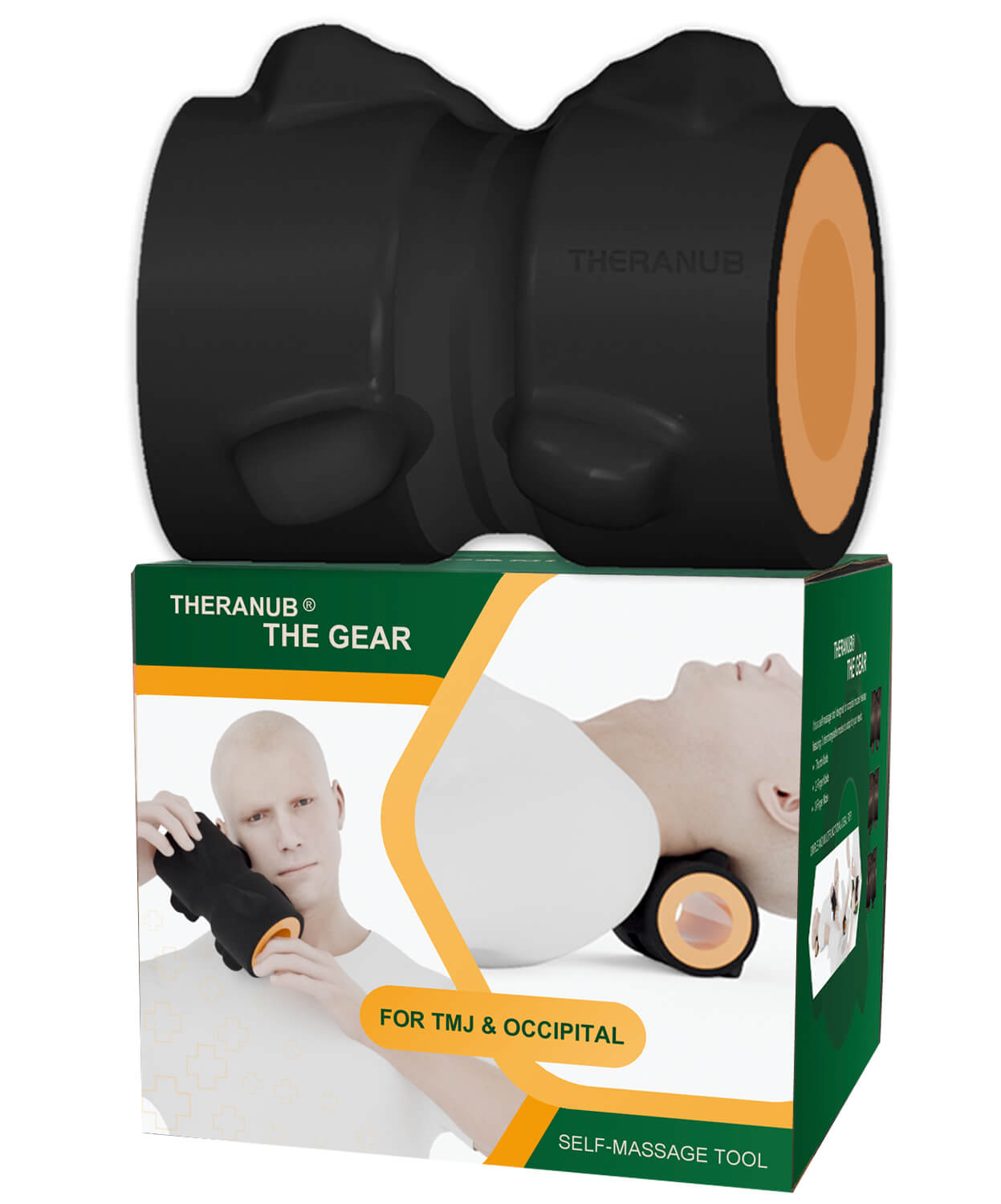
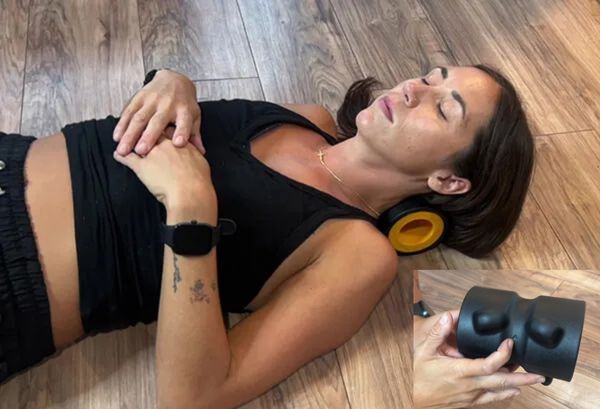
Just lie back on the floor or your bed, and gently tuck the tool under the base of your skull. Make sure the massage nodes line up with those tight muscles right below your head. Those little bumps are designed to hit all the right spots where you hold tension.
Close your eyes, relax completely, and let the weight of your head do the work—it’ll create just the right amount of pressure. No appointment needed, no helper required. You’ve got this.
THERANUB® Gear
Fix your tech neck
Use the “3-finger guide” (that’s the side with the triangle pointing outward), and tilt the gear side out to get the perfect angle. You’re almost there. Now just do other 2 easy moves to help loosen up your neck and improve flexibility.
Step 2: Stretching Exercises – Activating the "Hidden" Overworked Muscle Groups
Tech neck isn’t just a pain in the back of your neck—it can also mess with your jaw, the sides of your neck, and even those deep support muscles you didn’t even know you had.
Try adding some easy stretches to Step 1. They’ll help loosen up tension not just in your neck, but even in your head and face.
THERANUB® Gear
Fix your tech neck
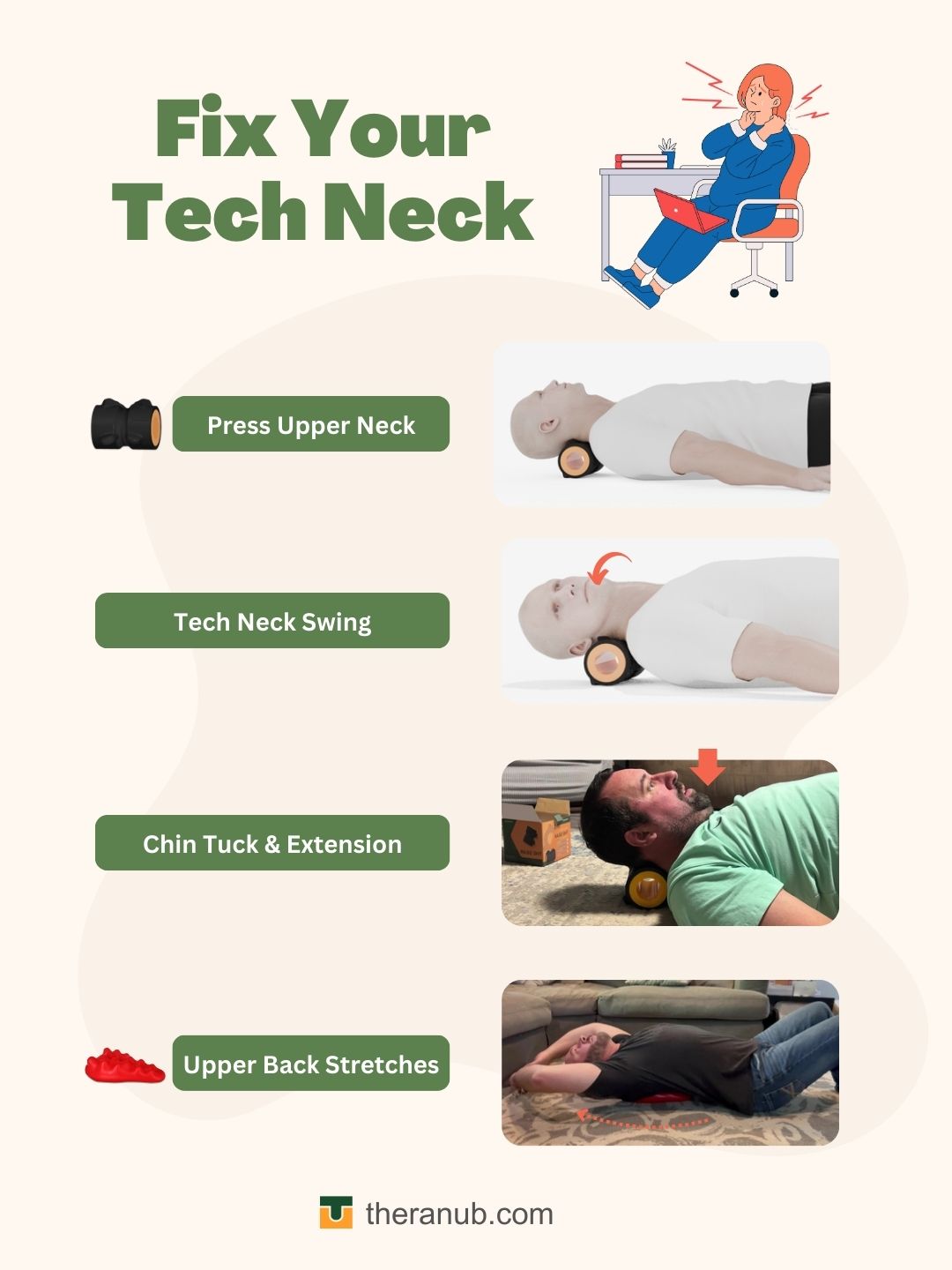
Move 1: Dynamic Neck Swing
- Slowly turn your head all the way to the left, then to the right.
- Keep your chin slightly lifted (to stretch the front neck muscles).
- Perform 10 reps per set, 3 sets total, focusing on the stretch along both sides of your neck.
Move 2: Chin Tuck & Extension
- Tuck your chin toward your chest and hold for 5 seconds.
- Then, tilt your head back until your chin points upward and hold for 3 seconds.
- Repeat 10 reps × 3 sets.
While these first 2 steps help relieve superficial tension, fully fixing tech neck requires addressing the root cause. Stay tuned for deeper corrective strategies.
THERANUB® Gear
Fix your tech neck
Step 3: Shoulder Blade Stretches
Why does massaging the neck only provide temporary relief?
When you massage your neck for pain relief, it may feel better in the moment, but to truly address the issue, you need to release tension in the shoulder blades. These muscles indirectly pull on the neck through fascial connections.
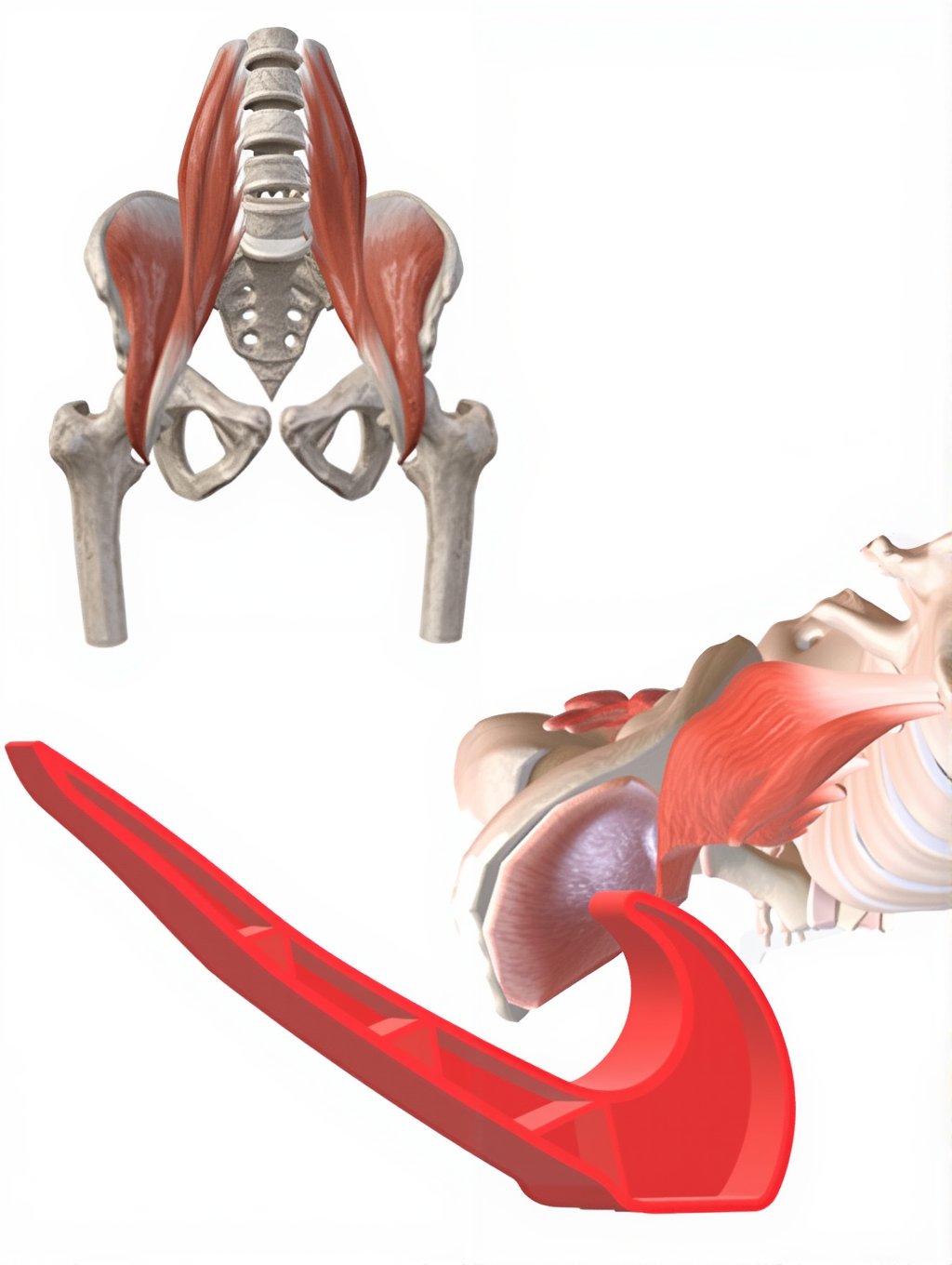
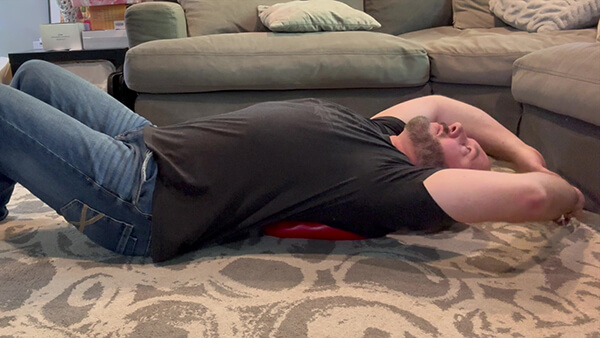
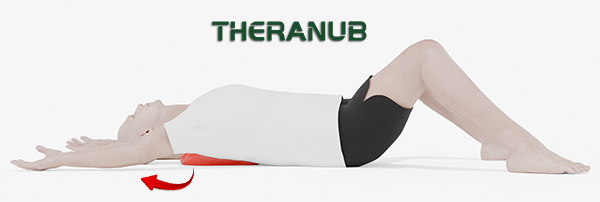
Instead of applying direct pressure to these muscles, you can use the Wedge to lift your thoracic spine and relax them by extending your arms. This movement also helps relieve shoulder fatigue and reduces the pulling force of tight chest muscles on your neck.
THERANUB® The Wedge
Loosen tight shoulder blades
How to do it:
- Lie on your back and position the Wedge beneath your upper back.
- Place your arms at your sides.
- Slowly circle them outward until they meet overhead with your arms fully extended.
THERANUB® The Wedge
Loosen tight shoulder blades
Prevention is Better Than Cure: Start with Daily Habits
While short-term fixes are important, long-term prevention is key. Tech neck develops from prolonged poor posture, and to truly address the issue, targeted recovery methods alone aren’t enough—you need to change your daily habits. These simple, practical tips will help you reduce neck strain at the source and prevent recurring symptoms.
1. Use Electronic Devices Correctly
- Smartphone use: Hold your phone at eye level—consider using a stand for support.
- Computer setup: Adjust your monitor so the top of the screen aligns with your eye level, and keep your keyboard and mouse within comfortable reach.
2. Strengthen Your Core Muscles
Recovery is just the beginning—strength is the long-term solution. Targeted strength training for your chest and abdominal muscles provides better support for your upper body, reducing compensatory strain on your neck and back.
Get rid of tech neck won’t happen overnight, but with consistent, science-backed daily habits and targeted exercises, you can reclaim a healthy cervical spine.
3. Simple & Effective Recovery Plan
Stay committed, and you’ll see positive changes soon. Recovering from tech neck is a gradual process—try a daily 6-minute "massage + stretching" routine.
Using the Gear and Wedge, most people notice significant improvements within 2 weeks:
- Increased neck mobility
- Reduced headaches
- Improved overall comfort
Take good care of your neck—don’t let it steal your health.
THERANUB®
Click to buy on Amazon
What's So Special About the Gear and the Wedge?
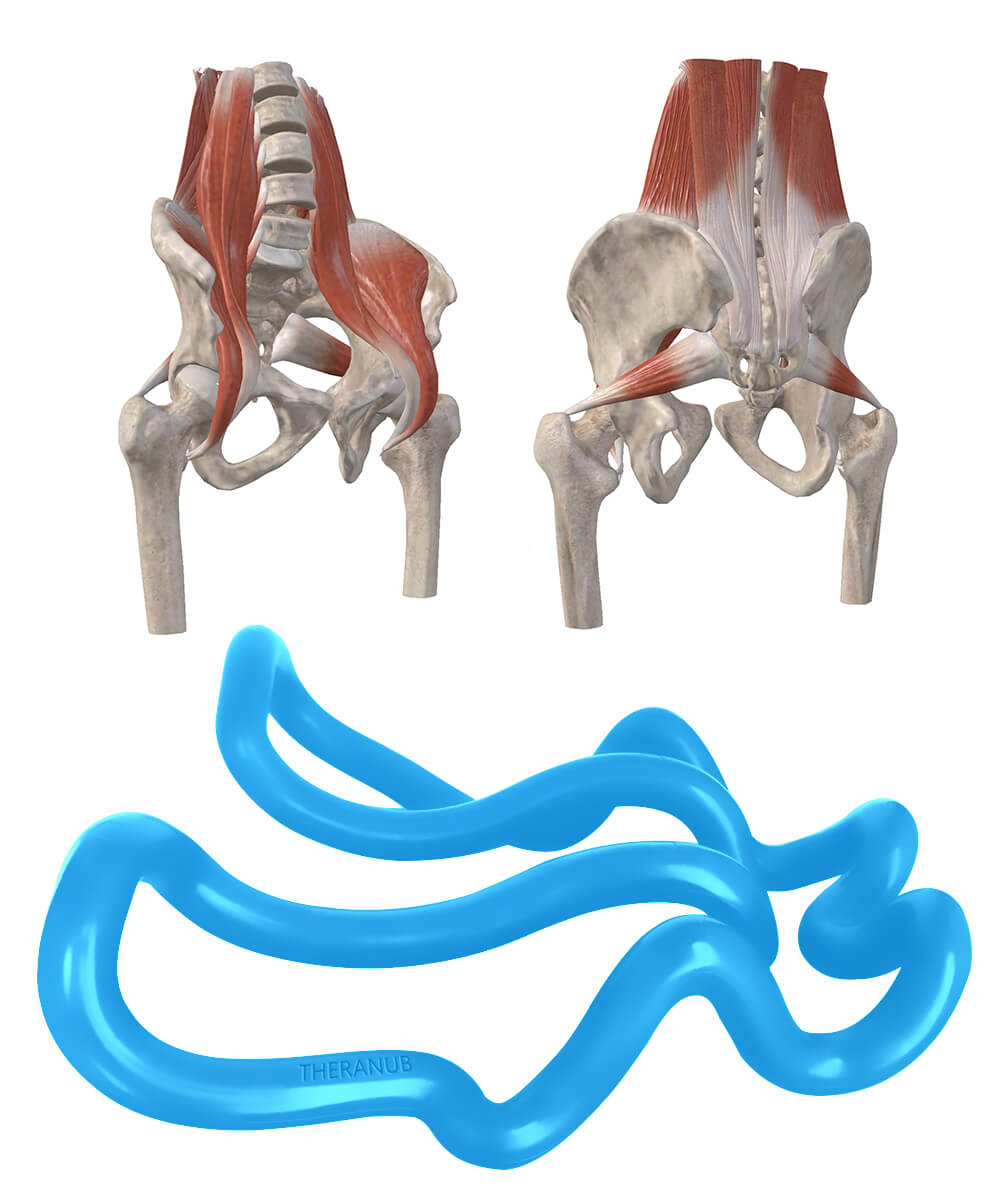
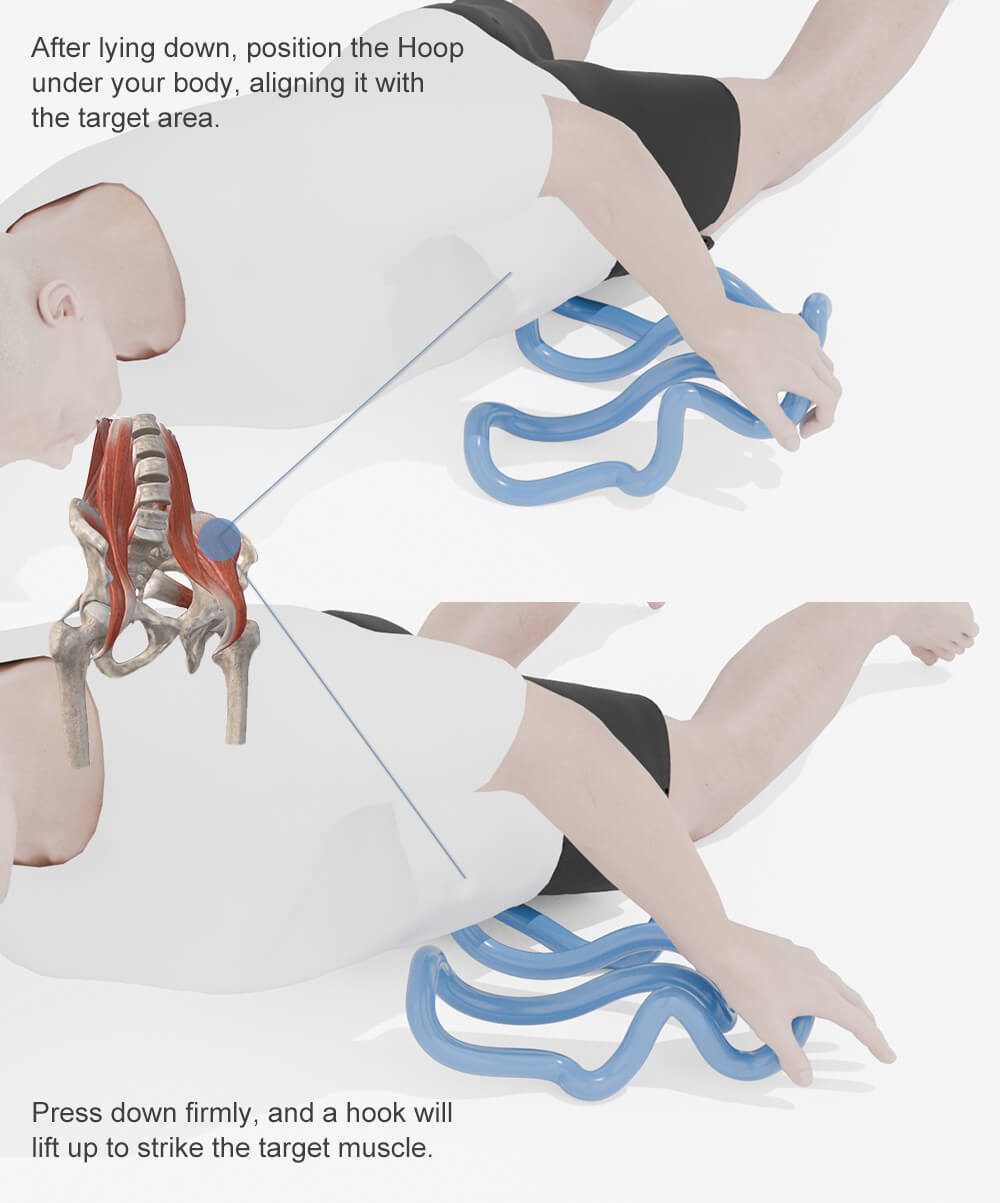
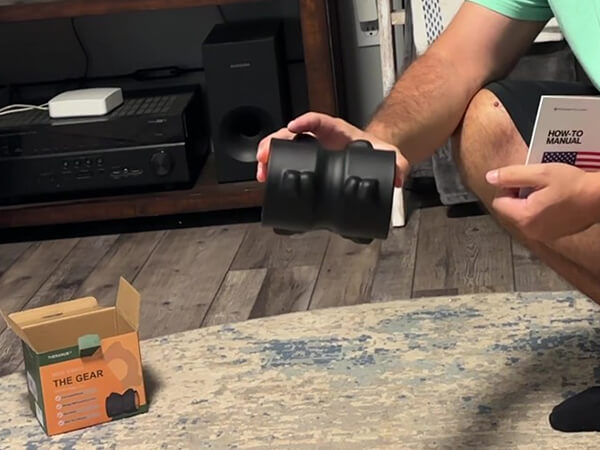
The Gear comes with 3 sets of bumps designed with input from real physical therapists. Its smart triangular positioning system helps you apply the right amount of pressure at the correct angle—so even if you’re new to massage, you can get a pro-level treatment at home. We’ve also added all-new thumb and two-finger modules that combine 3 proven massage techniques, making the Gear more versatile than ever.
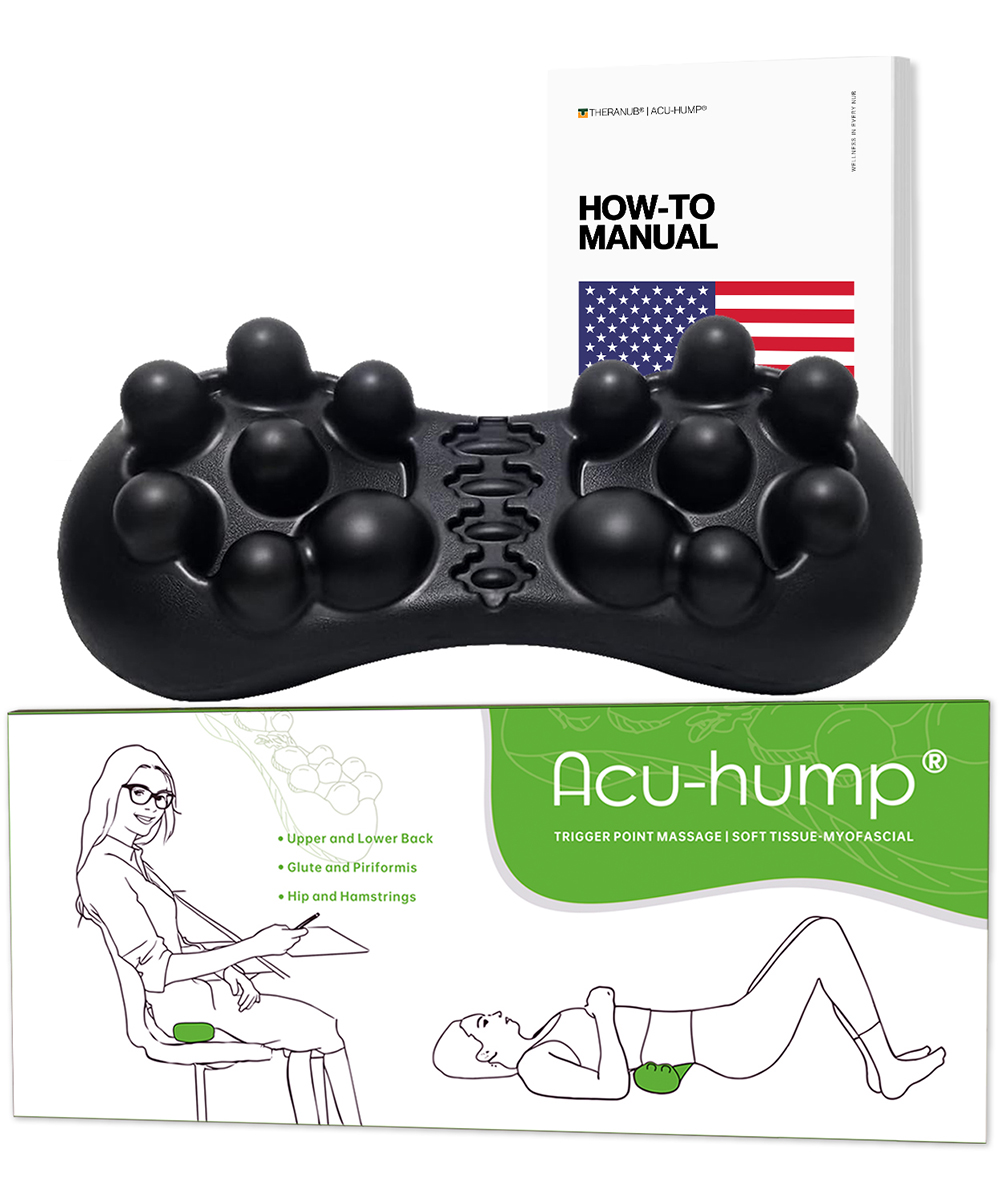
The Wedge is a 2-in-1 tool made for both massage and stretching. Designed by physical therapists specifically for the upper back, its 16 targeted bumps reach tight spots between your shoulder blades that regular foam rollers can’t. It sits firmly on the floor, so it’s super easy to use—way better than struggling with a ball or roller.
FAQs: How to Use Devices Safely & Effectively
Q: Does it need to be charged?
A: Nope. The Gear is completely mechanical—no batteries or cords needed. No appointments, no hassle. Get relief whenever you need it.
Q: Can I use it as a pillow?
A: Definitely not. Using it as a pillow won’t help—and might even make you uncomfortable. Remember: bad posture, thick pillows, and poor sleep habits are big contributors to tech neck. If you don’t change those habits, even the best massage won’t fully fix the issue.
Q: Is the Gear for everyone?
A: If you have any of the following, you should NOT use Gear: vertebral artery issues, recent neck fractures, nerve or blood vessel concerns, or any sudden loss of strength/sensation.
Q: Can the 3-step method really fix my tech neck?
A: It’s great for relieving tension and easing discomfort—but it’s a temporary fix. Think of it like hitting the pause button on pain: it stops the cycle of tight muscles and headaches right away.
But if you don’t change what’s causing the problem (like staring down at your phone or clenching your jaw from stress), the pain will likely come back. So relax those muscles—but don’t forget to tackle the bad habits too.
Take Back Your Day from Tech Neck.
Try this simple 3-step routine—it’s easy enough for anyone to learn.
Just 6 minutes a day at home can help keep tech neck away.
THERANUB®
Click to buy on Amazon